India’s infrastructure growth has always depended on what lies beneath the surface. From irrigation canals to telecom cables and water pipelines, underground networks form the backbone of development, and the modern trencher plays a crucial role in building these hidden systems efficiently.
In the early years, trenching work was carried out manually, which was slow and labour-intensive. As projects became larger and more time-bound, the need for better methods increased, leading to the adoption of mechanised trenching solutions across sectors.
Manual digging could not meet the growing demand for precision and speed. Uneven trenches, excess soil disturbance, and long execution times were common challenges. As underground utility networks expanded, the need for specialised solutions became unavoidable. This shift marked the beginning of mechanised trenching practices across India.
Before dedicated machines were introduced, most trenching work relied on manual labour or general excavators. While excavators were powerful, they were not suitable for narrow and uniform trench requirements. Projects such as fibre optic cable trenching or pipeline laying demanded accuracy that traditional methods struggled to provide.
Common issues included inconsistent depth, higher restoration costs, and unnecessary surface damage. These limitations pushed engineers and contractors to look for better alternatives designed specifically for trench creation.
The introduction of the early trencher machine changed how infrastructure projects were executed. These machines were built to cut uniform trenches with better depth control and minimal surface disruption. They significantly reduced labour dependency and improved project speed.
As infrastructure projects expanded, different types of trenchers began to appear in the market. Each design addressed specific needs such as soil conditions, trench width, and project scale. This period marked the structured development of the trencher industry in the country.
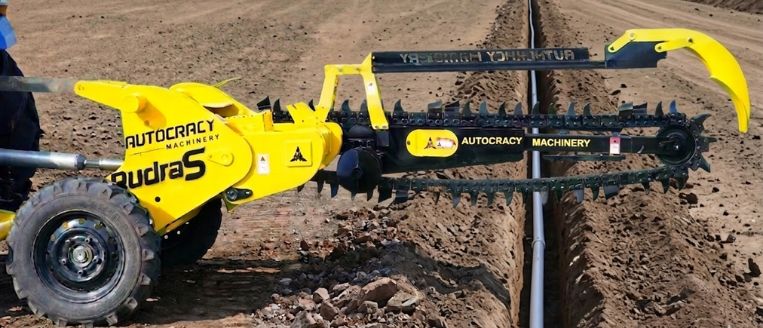
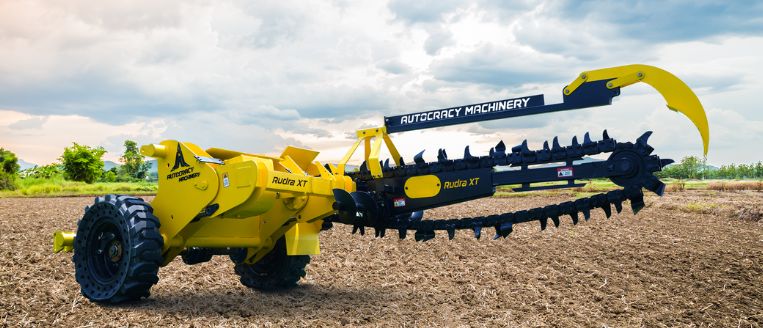
One of the major developments was the introduction of the single chain trencher. This design allowed continuous cutting with stable depth control and was widely used in agricultural trenching and underground utilities. Over time, the double chain trencher was introduced for wider and deeper trench requirements.
The chain trencher became popular because it could handle mixed soil conditions efficiently. These machines were widely adopted for pipeline laying and rural infrastructure projects where uniform trench profiles were essential.
As urban infrastructure projects increased, trenching requirements changed. Cutting through asphalt and concrete demanded a different approach. This led to the development of the wheel trencher, which uses a rotating cutting system for controlled trenching in paved surfaces.
Unlike traditional digging methods, this specialised trenching machine offered precise trenching in high-traffic areas. It reduced road damage and improved restoration efficiency, especially in telecom and utility works.
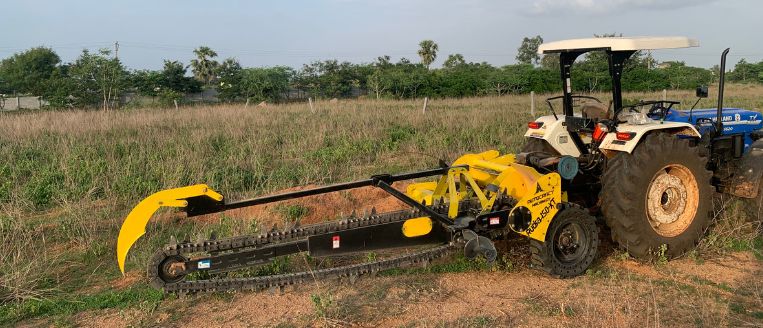
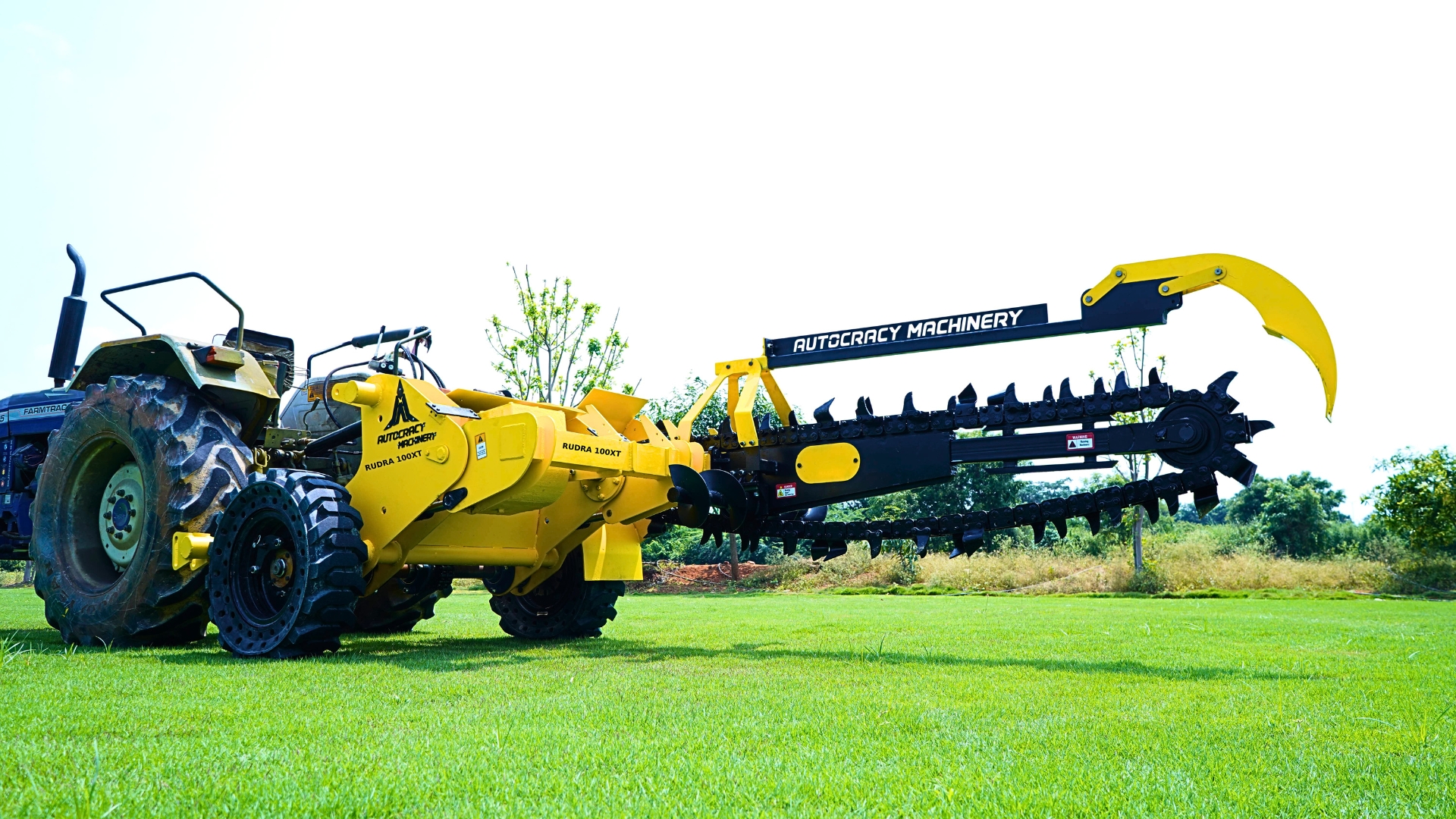
Another milestone in trenching technology was the introduction of the trencher attachment. Instead of purchasing standalone heavy equipment, contractors could mount trenching systems onto tractors or carriers. This innovation made trenching more accessible and cost-effective.
Such advancements helped position trenchers as reliable utility trenching machines. The adaptability of these systems allowed them to function across rural fields, semi-urban areas, and city environments with equal efficiency.
As demand increased, local innovation played a key role in shaping trenching equipment India solutions. Manufacturers began designing machines suitable for Indian soil conditions, such as clay, sandy loam, and black cotton soil.
Today, buyers do not just look for a trencher manufacturer or a trencher seller. They seek long-term service support and customised engineering solutions. The role of a dependable trencher supplier has become more important as projects grow in complexity.
In the present day, trenchers are no longer optional tools. They are essential assets for structured underground infrastructure development. Whether used in agricultural trenching, fibre optic cable trenching, or pipeline laying, these machines ensure consistent trench dimensions and improved efficiency.
A modern trencher machine supports better fuel efficiency, improved operator safety, and controlled soil displacement. The emphasis today is not just on digging, but on precise trenching that reduces rework and protects surrounding surfaces.
The future of trenching in India will continue to focus on efficiency, durability, and adaptability. As underground infrastructure expands, the demand for advanced trencher equipment will grow further. Innovation will likely move towards smarter controls and improved operational safety.
The journey from manual digging to advanced mechanised systems reflects India’s infrastructure growth. The evolution of the trencher highlights how technology adapts to project demands and field realities.
At Autocracy Machinery, we focus on developing purpose-built solutions that align with real-world site conditions. If you would like to understand more about modern trenching solutions and how they can support your projects, feel free to connect with our team for further information.