Whether the work is in rural areas, village roads, agricultural fields, or semi-urban zones, the success of the project depends on how clean and uniform the trench is. Contractors and engineers often look for equipment that can dig to the required depth without disturbing large portions of land.
Selecting the right machine at the beginning can reduce cost, labour effort, and rework later in the project. A trencher machine plays a critical role in water pipeline projects that require accuracy, speed, and controlled soil removal.
In such projects, two types of equipment are commonly considered: a trencher machine and an excavator. Both are used for digging, but their working method and outputs are very different. Understanding this difference helps project planners make better decisions for pipeline laying work.
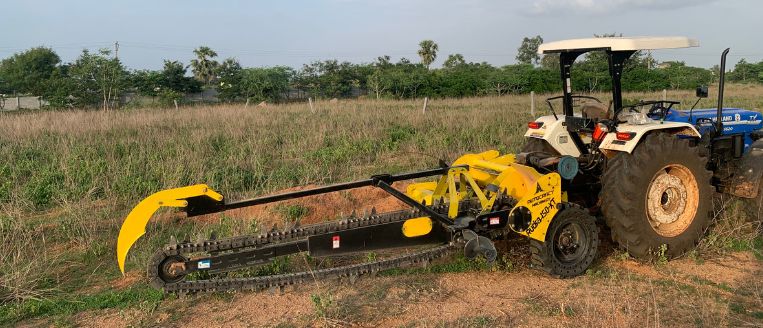
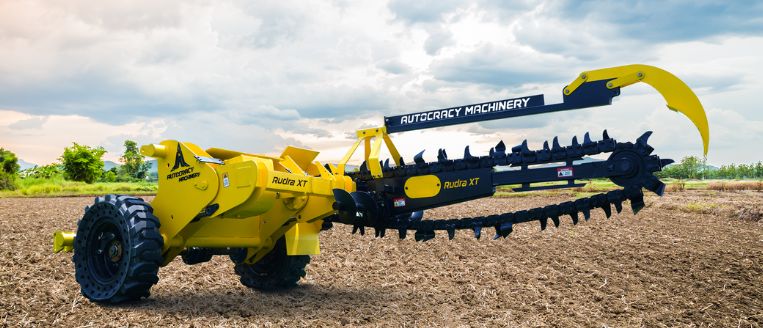
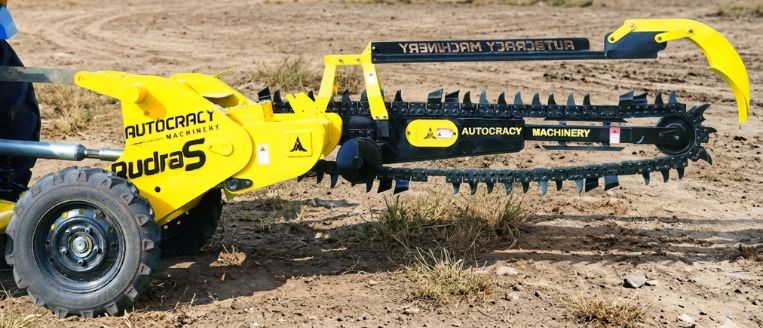
A trencher is designed specifically to dig narrow and consistent trenches. It cuts the soil using a rotating chain fitted with teeth and maintains controlled trench width and depth across long distances. The machine moves steadily forward while removing soil in a defined profile.
This makes it highly suitable for pipeline laying where uniform trench dimensions are important. Instead of digging wide pits and reshaping them manually, the equipment produces ready-to-install trenches in one pass. In water infrastructure, this level of precise trenching reduces the time spent on finishing work.
An excavator is a multipurpose digging machine used for bulk excavation, loading, and material handling. It works by scooping soil using a bucket attached to a hydraulic arm. While excavators are powerful and versatile, they are not designed for narrow, continuous trench profiles.
In water pipeline projects, an excavator often removes more soil than required. This results in wider trenches that may need additional backfilling and compaction. Although useful for large earthmoving tasks, excavators may not always be the most efficient option for controlled trenching.
In pipeline laying, the main challenges include:
Maintaining consistent depth
Avoiding excess soil removal
Reducing restoration cost
Completing long stretches quickly
When trenches are too wide, extra material must be refilled and compacted. This increases labour, fuel consumption, and total project time. In agricultural trenching or rural water supply works, unnecessary soil disturbance can also damage nearby crops or road surfaces.
This is where trencher machines offer a clear advantage. They remove only the required volume of soil, keeping the work clean and structured.
For water pipeline projects, the main objective is to create uniform channels that safely house pipes. Machines built for utility trenching are able to achieve this with consistency. Utility
Advantages include:
Narrow and controlled trench width
Consistent depth across long distances
Faster linear digging speed
Lower fuel consumption per metre
Reduced backfilling work
Chain trenchers are particularly effective in mixed soil conditions. Their cutting system allows continuous movement without repeated repositioning. In contrast, excavators must stop, dig, swing, dump soil, and repeat the process.
For fibre optic cable trenching and water pipelines alike, speed and uniformity make a significant difference in overall productivity.
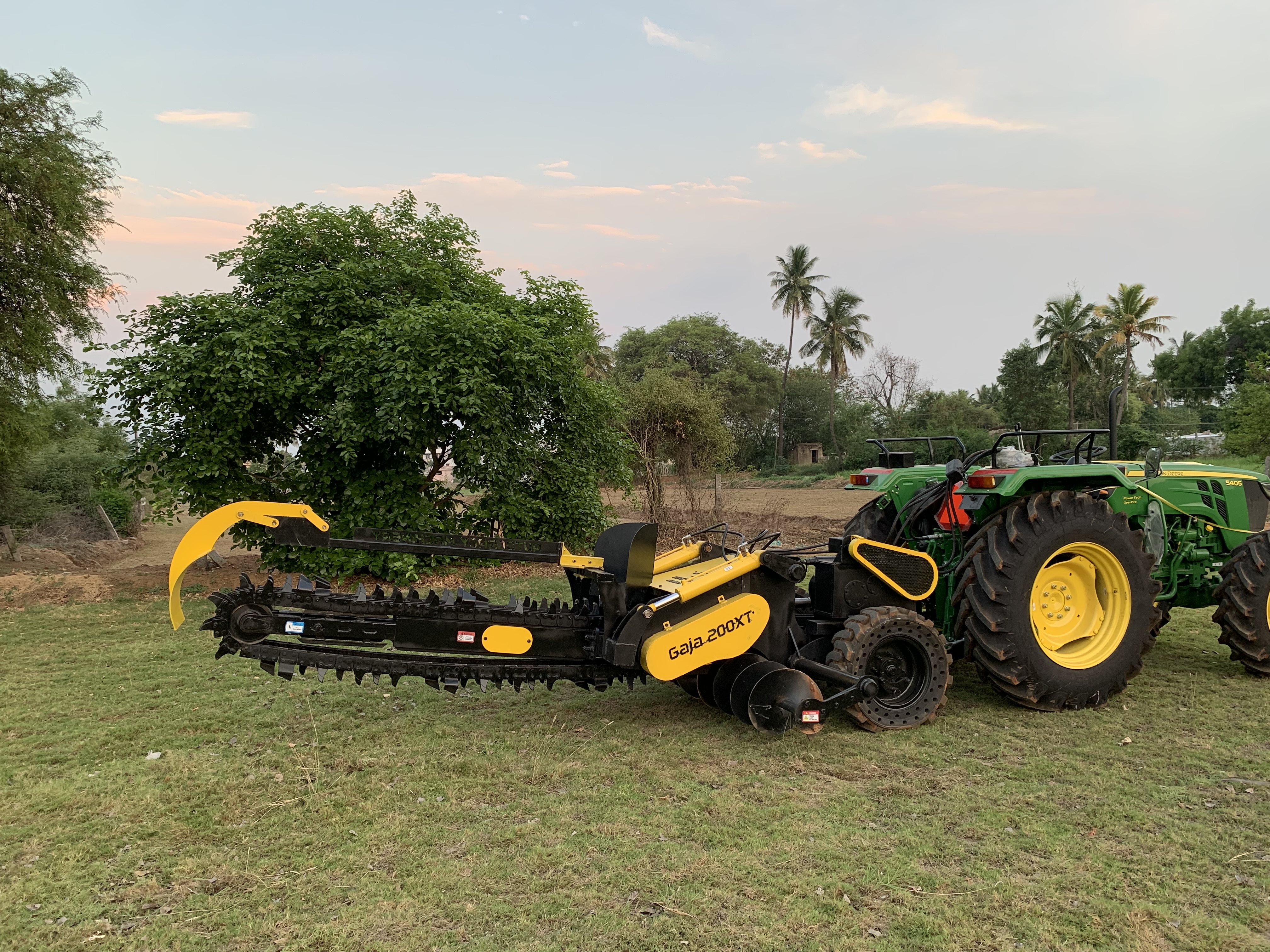
In large-scale pipeline laying projects, equipment such as the Gaja 200XT becomes highly relevant. This heavy-duty chain trencher is built for deeper and wider trenching needs in infrastructure and utility applications.
The machine is designed to support tractor-based operation, delivering consistent trench depth while maintaining operational efficiency. It is suitable for long-distance water pipelines, rural distribution lines, and canal-side works where controlled excavation is required.
With its strong cutting mechanism and stable frame, the Gaja 200XT ensures clean trench profiles even in challenging soil conditions. This reduces rework and improves pipe alignment accuracy. Compared to traditional digging methods, it offers a structured and time-saving approach to pipeline installation.
Using dedicated trenchers instead of excavators provides measurable advantages:
Less surface damage in agricultural fields
Lower manpower requirements
Improved safety during pipeline laying
Faster completion of linear projects
Better trench alignment for long runs
For contractors handling irrigation, municipal water supply, or rural development schemes, choosing the right method directly impacts profitability. When soil removal is limited to the required trench profile, restoration work becomes simpler and quicker.
Water pipeline projects demand precision, efficiency, and minimal disruption. While excavators are powerful machines for general excavation, they may not always be the ideal solution for narrow and continuous trenching. Purpose-built equipment provides better control, faster execution, and reduced overall cost.
Machines like the Gaja 200XT demonstrate how modern trenching solutions can improve pipeline laying outcomes. At Autocracy Machinery, we design and manufacture equipment that addresses real-world infrastructure challenges. If you would like to explore the right solution for your upcoming water pipeline project, feel free to connect with our team for more details.