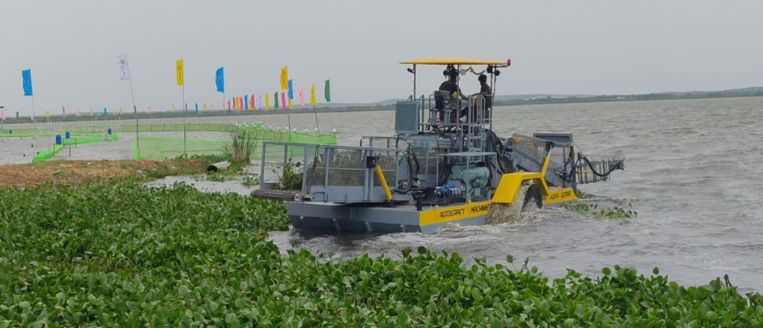
India's water bodies are in serious trouble. Lakes are losing their depth and becoming dirtier every year. Rivers are filling up with mud and sand. Canals that were built to supply water to farms are getting blocked with silt. Wetlands that clean water naturally are disappearing. The people and organisations responsible for fixing these problems face one big challenge every time. Getting the right equipment into the water to do the actual cleaning work has always been the hardest part. An amphibious excavator solves this problem completely. Environmental agencies, lake authorities, and water body cleaning teams who have used one know exactly why it has become the most important machine for water restoration work across India.
Normal excavators are built for solid, dry, and stable ground. When they are taken to the edge of a lake, canal or marshy area, they lose grip and become unstable very quickly. The cleaning work slows down and the results fall well short of what the project needs. A floating excavator machine works directly on the water surface and across soft, wet ground where standard equipment simply cannot operate safely or effectively.
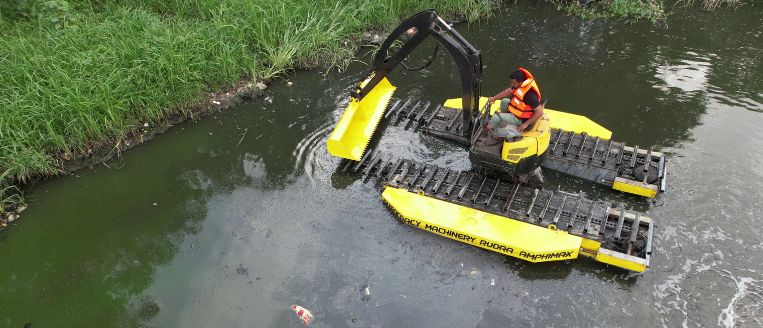
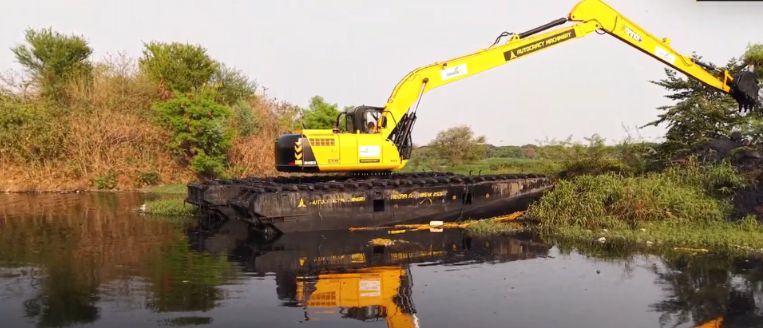
A pontoon excavator stays stable in water and soft ground because of the way its base is designed. The wide pontoon structure spreads the machine's weight evenly, preventing it from sinking and keeping it balanced throughout the operation. This allows the machine to move smoothly across open water and waterlogged terrain without stopping or losing control.
Lakes and reservoirs collect years of mud, waste, and pollution that reduce their water storage capacity and damage their ecosystem. A water body cleaning machine that floats goes directly into the lake and removes sediment from where it has actually settled at the bottom. This level of access is something that land-based equipment working from the bank can never achieve to the same standard. Lake authorities and irrigation departments consistently report far better results after deploying amphibious equipment on restoration projects.
India's irrigation canals have been filling with silt for decades, reducing water flow to farms and increasing flood risk every monsoon season. A canal desilting machine built on an amphibious platform enters the canal directly, stays stable, and removes silt to the depth the channel actually needs. Working from the bank with conventional equipment can never deliver the same quality or depth of cleaning. Farming communities depending on these canals benefit directly when the waterway is properly and thoroughly restored.
Rivers narrow over time as sediment builds up in bends and slow sections, raising flood risk for communities living nearby. A dredging excavator works inside the river and reaches the exact points where sediment is concentrated most heavily. For wetland projects, wetland restoration equipment of the amphibious type moves carefully through sensitive terrain without damaging plants, water flow, or wildlife habitat. A swamp excavator delivers the same controlled performance across marshy and waterlogged areas where no other machine can work reliably.
State irrigation departments, city lake authorities, and environmental agencies across India are increasingly specifying amphibious excavator India solutions for water body cleaning and flood management projects. India's extensive canal networks, urban lakes, wetlands, and monsoon-affected rivers all require equipment that can operate directly in water. An amphibious digger consistently delivers results in these environments that land-based machines simply cannot match. As water restoration programmes continue to grow in scale across the country, this equipment has become an essential part of every serious water body management project.
.jpg)