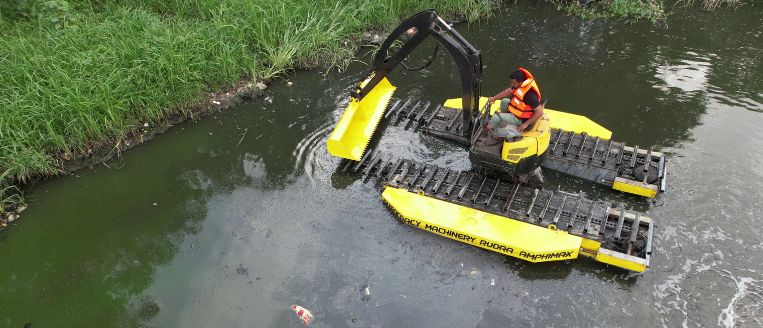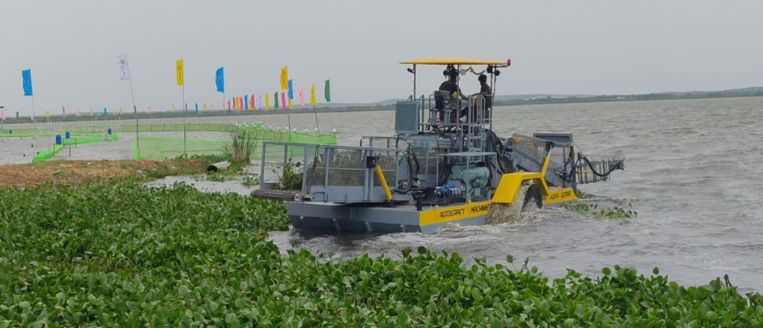
Lakes, canals, and reservoirs need regular care, but what we see today goes far beyond normal upkeep. Weeds are growing faster than teams can clear them, waste keeps coming in, and the people doing this work are running out of bandwidth. An Aquatic Weed Harvester gives maintenance teams a practical tool that matches the scale of what they are actually dealing with on the ground.
Water hyacinth is worth addressing specifically. It spreads fast, sometimes doubling within days. It sits heavy on the surface, shuts out sunlight, and drains oxygen from the water underneath. Over time, this affects fish, disrupts ecosystems, and limits the usability of the water body. Plastic and debris collect under and around the growth. Once it establishes itself, you cannot pull your way out of it manually.
When irrigation canals get blocked, farmers simply do not get the water they need. City lakes start emitting a bad odor, and people stop using them. Overgrown, still water is where mosquitoes breed, and the people living nearby pay the price in terms of health. When maintenance teams reach the site, the weed growth is often so heavy that even passing a boat becomes difficult before any cleaning work starts.
This is not a problem tied to a single geography or type of water body. Rivers, reservoirs, and lakes across regions face the same conditions. The longer nothing is done, the worse the starting point becomes.
Rakes, nets, and physical labour have been the standard approach for a long time. For a small patch of water, that is fine. But when the area grows to a large lake or a long stretch of canal, the same approach stops delivering results.
Weeds come back before the team even wraps up the first round. Bringing in one machine for weeds and another for waste separately costs more time and more money. Eventually, the only thing that makes sense is one machine that takes care of both.
A lake cleaning machine works directly on the water without needing to stop frequently. The cutting blades cut through thick weed growth right at the base. A conveyor then moves everything, cut weeds, floating plastic, and loose debris, into an onboard storage unit. Once that fills up, the machine pulls up to the bank, unloads, and heads back out.
The work does not pause for long. The machine pushes through thick growth without getting stuck and picks up surface waste as it goes. An aquatic weed removal machine working this way gets through far more area in a day than any crew with hand tools, which is what makes it suitable for large water bodies and scheduled maintenance programs.
Weeds and waste do not arrive separately on a water body. They build up together, and if cleaning only targets one, the other stays behind. The floating trash skimmer function built into the harvester means plastic, organic matter, and surface debris all come out in the same run as the weeds. The water gets a proper clean, not a partial one.
Water flows better through cleared canals. Oxygen levels recover in lakes. Pollution drops without needing extra equipment or repeat visits. That is the practical outcome of a thorough single pass.
Cleaning once is not enough. Weeds and waste come back quickly. Without regular work, the water becomes dirty again in a few weeks. Good equipment helps teams clean regularly and keep the water in good condition.
What comes off the water does not have to go straight to waste either. Water hyacinth and other organic material can be composted and used productively. It is a straightforward way to reduce what gets thrown away and get something useful out of the process.
Autocracy Machinery builds lake cleaning machines for the conditions teams actually work in, not ideal setups. Their equipment holds up in the field, is not complicated to run, and works across lakes, canals, and rivers. For any organisation that needs water maintenance to actually stay on track, the right machine is where that starts.

.jpg)