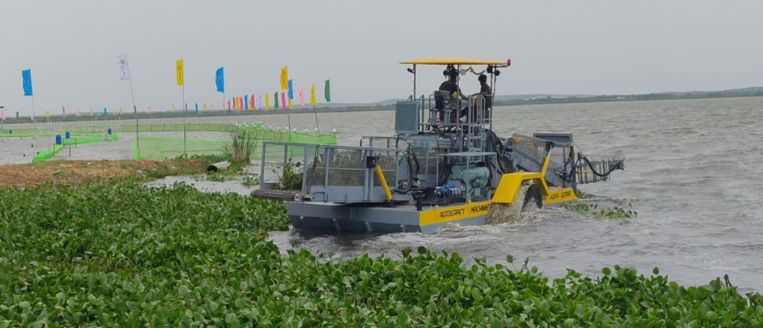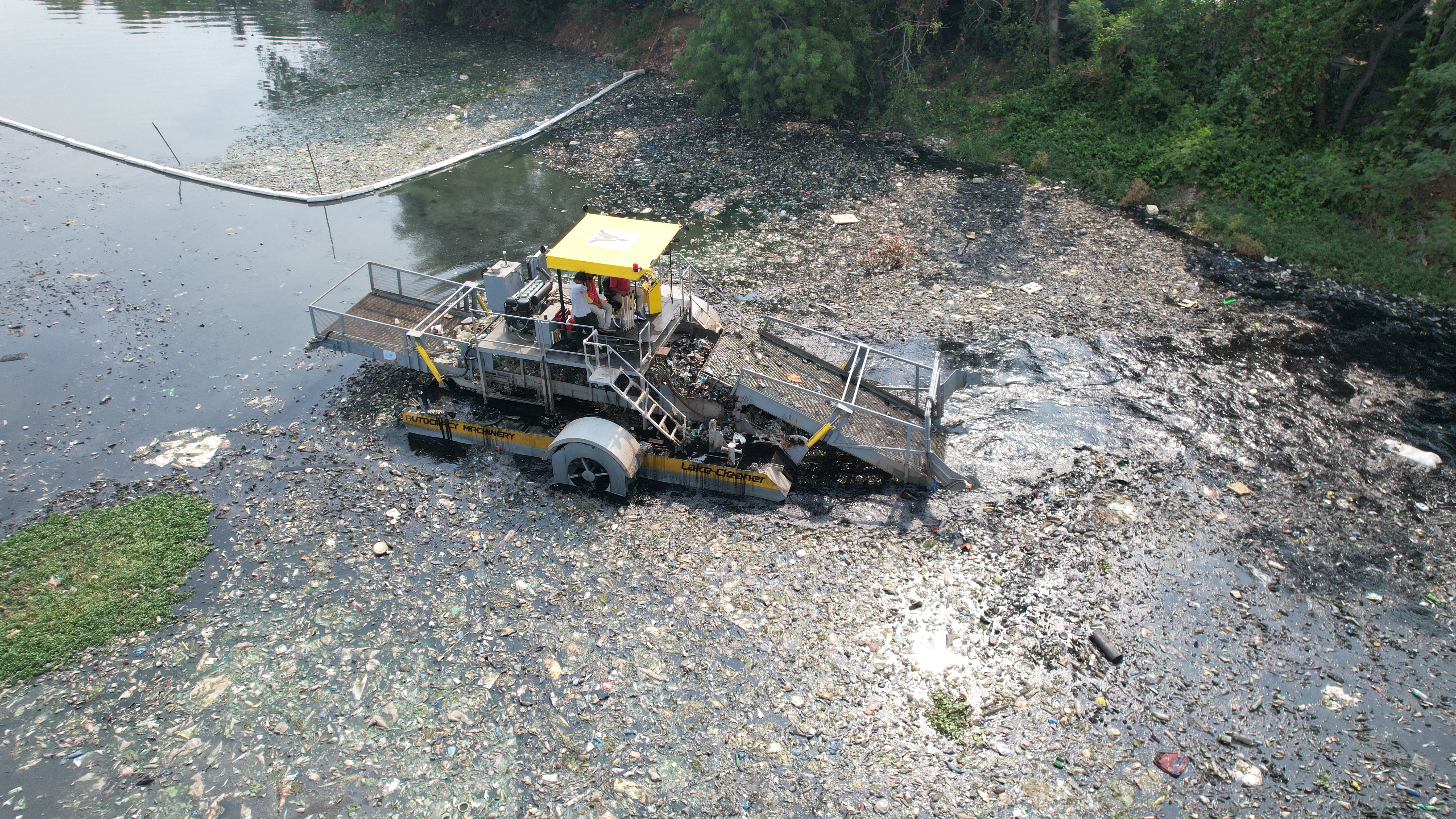
Lakes, rivers, and canals across both cities and rural regions are increasingly affected by plastic waste and floating debris, making Rudra Aqua Max floating trash removal necessary to keep water bodies usable and healthy. Growing urban activity, tourism, and seasonal runoff continue to add visible waste to open water systems, while traditional cleaning methods are no longer sufficient to manage this scale of pollution.
Modern water management now relies on planned and mechanised surface cleaning methods that work without disturbing aquatic life. Regular removal of surface waste helps maintain water flow, improves oxygen exchange, and supports natural ecosystems. This approach plays an important role in long-term environmental sustainability and waterbody restoration efforts.
Manual collection of floating waste is slow, labour-intensive, and often unsafe in polluted or flowing water bodies. It also limits coverage, leaving large sections untreated and allowing waste to spread downstream. Mechanised systems provide consistency, speed, and predictable outcomes across large areas.
By enabling scheduled cleaning cycles, authorities can prevent blockages, reduce flood risks, and maintain visual cleanliness. In long-term restoration projects, early intervention through Rudra Aqua Max floating trash removal supports healthier ecosystems and lowers the cost of future rehabilitation.
After understanding the challenge, it becomes clear why specialised equipment is required for surface-level water cleaning. The Rudra Aqua Max is designed to address floating waste accumulation in a controlled and environmentally responsible manner. It operates directly on the water surface, targeting debris before it sinks or disperses.
As an aquatic cleaning machine, it supports systematic collection of plastics, organic matter, and surface vegetation. Its floating platform allows steady movement across calm and flowing water, enabling operators to work close to banks, inlets, and congested zones without disturbing sediment layers.
Urban lakes often act as collection points for plastic waste, festival residue, and stormwater inflow. In such settings, lake debris removal becomes critical to prevent odour, algae growth, and public health concerns. Regular surface cleaning improves both ecological balance and community engagement.
In flowing water systems, a river debris collector helps intercept waste before it reaches downstream reservoirs or coastal zones. This approach is especially effective near bridges, barrages, and drainage outlets where floating materials tend to accumulate and restrict water movement.
Beyond visible cleanliness, water surface management supports broader sustainability goals. Mechanised collection reduces dependency on unsafe manual labour and ensures predictable daily output for large projects. For planners and engineers, this reliability simplifies maintenance scheduling and compliance reporting.
Used as an Aqua Max harvester, the machine also assists in managing surface vegetation that interferes with sunlight penetration and oxygen exchange. When integrated into restoration plans, such systems help revive aquatic habitats while maintaining navigability and water quality.
Environmental initiatives today demand accountability, efficiency, and measurable impact. Equipment that delivers consistent results with minimal disruption is preferred across government and private sustainability programmes. The ability to adapt to varied water widths and depths adds practical value on-site.
For contractors and civic bodies, investing in reliable Rudra Aqua Max Floating Trash Removal solutions reduces long-term costs and improves project outcomes. Consistent surface cleaning prevents secondary damage, protects infrastructure, and contributes directly to healthier water ecosystems.
Effective surface cleaning is no longer optional in modern water management strategies. Purpose-built machines now play a central role in maintaining ecological balance, managing waste inflow, and supporting climate-resilient infrastructure. Their contribution extends beyond cleanliness to long-term environmental protection.
Such solutions are developed and deployed by experienced manufacturers like Autocracy Machinery, supporting sustainable water management initiatives through reliable engineering and responsible innovation.

.jpg)