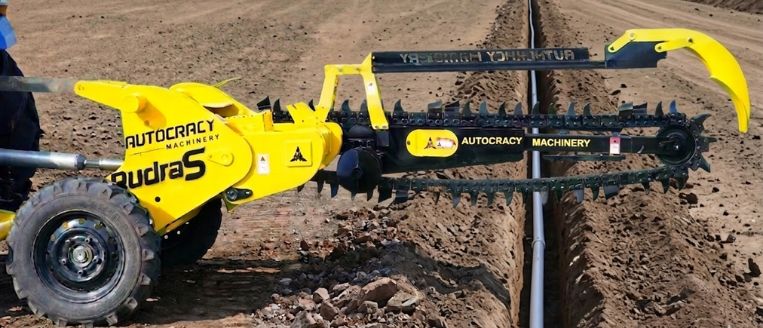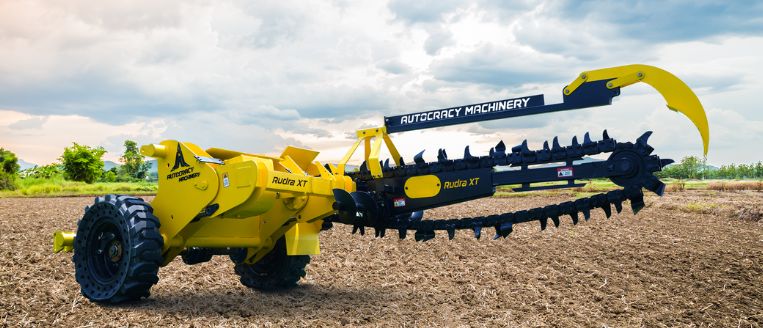
Modern defence infrastructure depends heavily on reliable underground construction. Secure communication lines, protected utility corridors, and battlefield preparedness all require a Heavy-Duty Military Trenching Machine for safety and efficiency.
A Multi Chain Trencher plays a critical role in these operations by enabling controlled trenching across varied terrains without exposing personnel to unnecessary risk.
Unlike manual methods or general construction equipment, defence trenching demands machines that can work continuously in sensitive and remote zones with consistent results.
Defence projects face conditions that are very different from civilian infrastructure works. Border areas often involve uneven ground, rocky stretches, and restricted access. In such environments, Defence trenching machines must perform reliably while maintaining operational safety and speed.
Manual trenching is slow and unsafe, while conventional excavators struggle with mobility and trench uniformity. These challenges make specialised trenching solutions essential for defence-focused groundwork.
Military infrastructure frequently requires trenches that can accommodate multiple utilities within a single corridor. Power lines, optical fibre, drainage, and protective barriers often run together. A quad chain trencher is suited for this requirement as it enables wider trench formation in a single pass.
This approach reduces repeated excavation, minimises soil disturbance, and helps defence teams complete work faster while maintaining consistent trench geometry across long distances.
Trenching is a foundational activity in border area development. From secure cabling to physical barriers, underground work supports long-term operational readiness. Border trenching equipment must be capable of operating in isolated regions with limited logistical support.
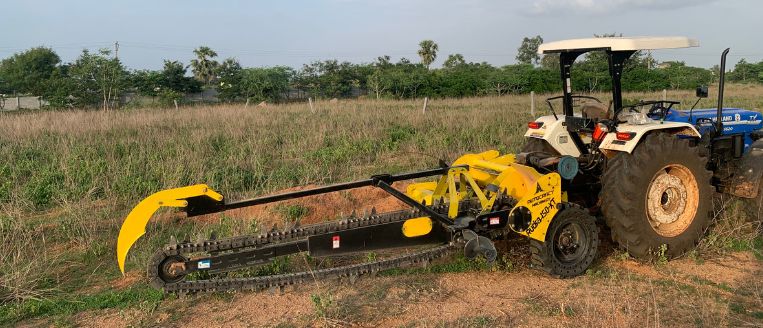
Tractor-mounted trenchers designed for defence use allow easy mobilisation and quick redeployment, which is essential when working across extended border corridors.
In defence planning, trenching is not limited to utilities alone. It also supports tactical applications such as protected movement paths, fencing foundations, and defensive layouts. Military trenching requires machines that deliver consistent depth and width to ensure structural reliability.
Mechanised trenching improves accuracy and reduces exposure time for personnel, which is especially important in sensitive or high-risk zones.
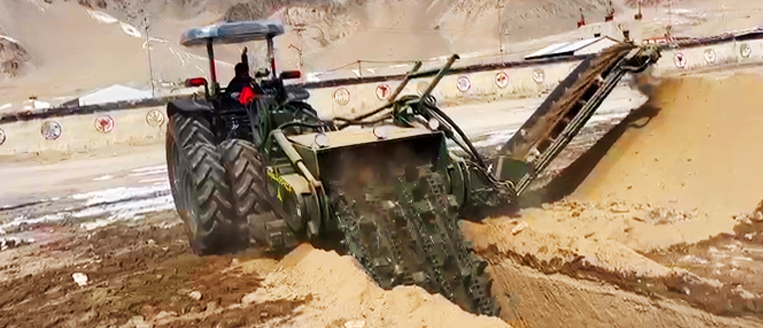
High-altitude defence locations bring additional challenges like unstable soil, limited working windows, and harsh weather. Equipment used in these regions must maintain performance without frequent intervention.
High-altitude trenching demands stable traction, controlled cutting action, and the ability to work on slopes or compacted ground. Machines engineered for defence trenching help maintain progress even in these demanding environments.
Modern defence systems rely heavily on underground communication infrastructure. Optical fibre, data cables, and control lines need secure placement to prevent damage or interception.
Trenching machines used for communication ducts ensure straight, uniform trenches that simplify cable laying and backfilling. This improves long-term reliability of defence communication networks while reducing maintenance needs.
Defence zones often require multiple underground systems to be installed together. Fuel lines, drainage, power supply, and data networks must coexist within planned corridors. Tactical utilities trenching focuses on precision and coordination rather than speed alone.
Multi-chain trenching solutions support this requirement by creating wide, clean trenches that can accommodate layered installations without repeated excavation.
Large-scale defence construction projects require equipment that can operate for long hours with minimal disruption. Border infrastructure trenchers are expected to deliver steady output while handling varying soil conditions and remote work locations.
Mechanised trenching reduces dependency on large workforces and improves overall project control, which is essential in defence-led execution.
The Gaja 400XCA is developed to meet the complex trenching needs of defence operations where width, depth, and stability are critical. Its design supports wide trenching in a single operation, making it suitable for strategic defence applications across varied terrains.
By enabling safer, faster, and more controlled trenching, it supports modern defence infrastructure planning and execution. Autocracy Machinery manufactures specialised trenching solutions designed to meet the evolving requirements of defence and strategic infrastructure projects.