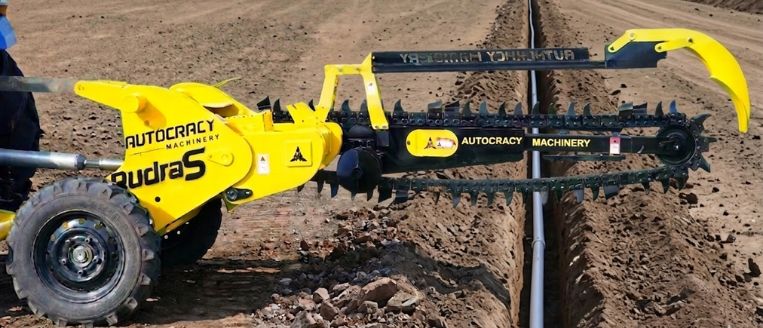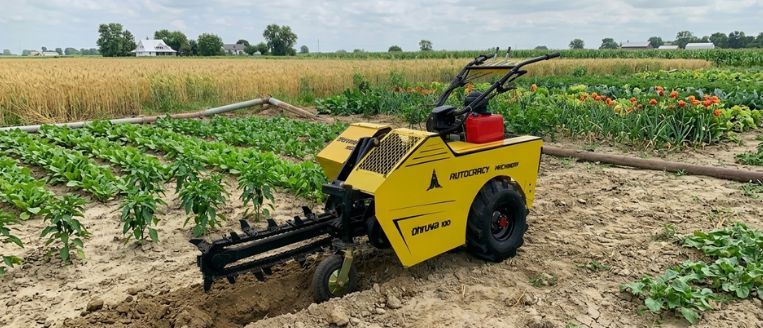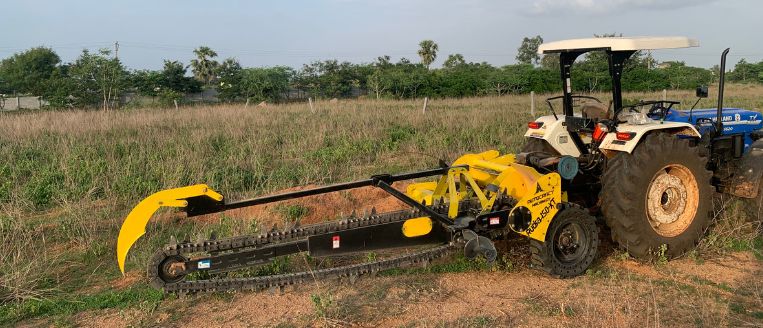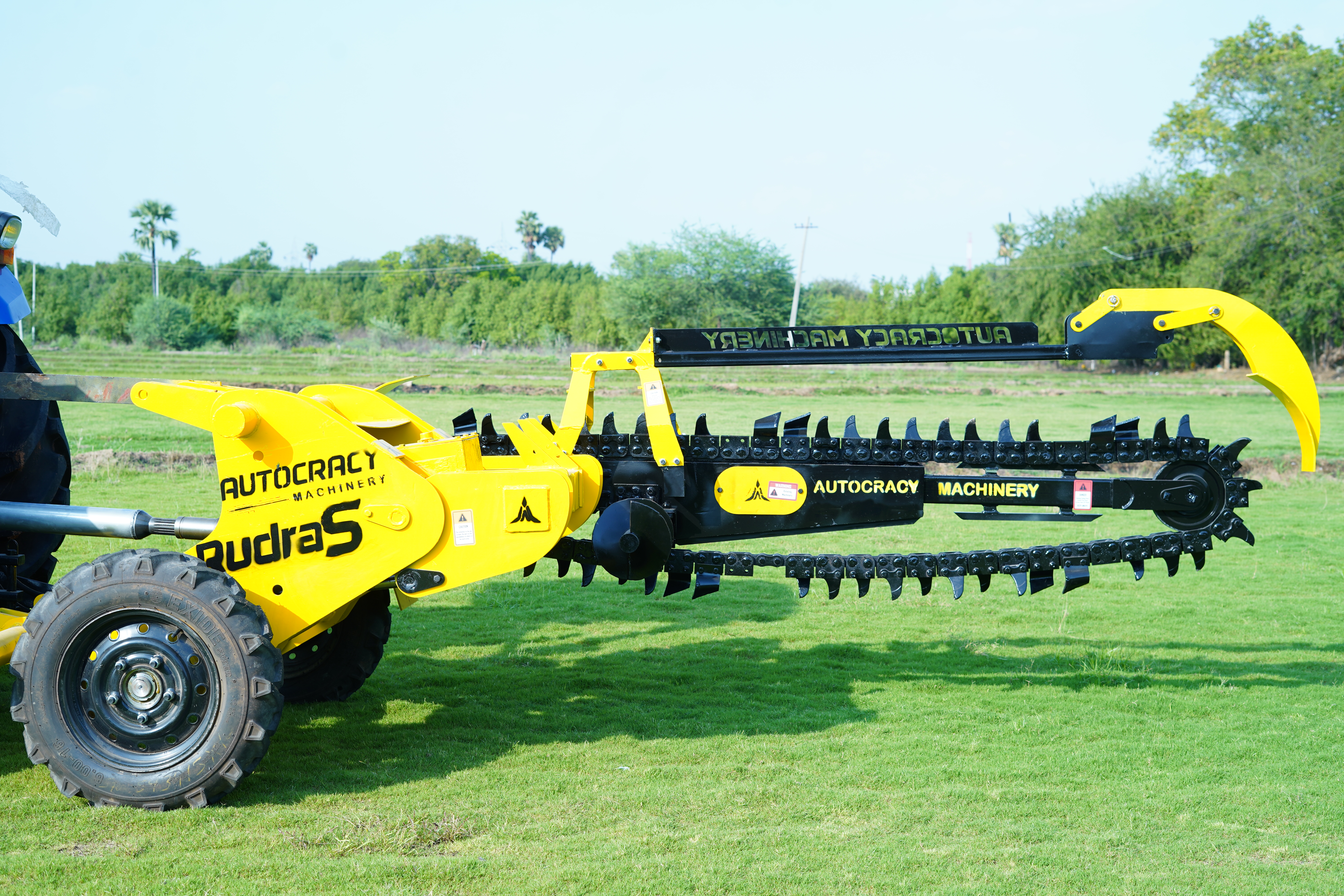
A trencher is a specialised machine designed to dig narrow, uniform channels in the ground for underground installations. In today’s infrastructure-driven environment, organised trenching has become essential for faster execution and better quality outcomes.
Compared to manual digging, a trencher delivers clean cuts, consistent depth, and improved site safety across projects.
Across India, infrastructure projects are expanding rapidly due to rural connectivity, urban development, and government-led utility programmes. Trenchers enable project teams to meet tight timelines while maintaining accuracy on-site.
Their growing adoption reflects the need for reliable equipment that can handle long working hours and varying soil conditions without delays.
A trencher is widely used wherever underground work is required without disturbing the surrounding surface. Roads, farmland, village lanes, and industrial zones all benefit from organised trenching methods.
By limiting excavation width, trenchers help reduce restoration work after installation, which is especially important in populated and cultivated areas.
Different site conditions require different machine designs, which is why Chain trenchers are commonly chosen for controlled and continuous digging.
These machines use a cutting chain mechanism that maintains steady progress even in mixed soil. Their design supports long trench runs with predictable output and minimal interruption.
For electricity, water supply, and drainage projects, utility trenching machines provide a structured approach to underground installation. They help create stable trenches that meet engineering requirements while reducing labour dependency.
This approach improves coordination between excavation and installation teams working on the same corridor.
Telecom expansion depends heavily on accurate ground preparation, and fibre optic cable trenching requires consistent depth and alignment.
Trenchers make it possible to prepare long stretches quickly without damaging nearby roads or pathways. This precision supports reliable network installation and faster restoration of public areas.
In farming regions, agricultural trenching plays a key role in improving water management and crop productivity. Trenchers help farmers install irrigation lines, drainage channels, and farm utilities with minimal soil disturbance.
This controlled digging preserves soil structure while speeding up seasonal preparation work.
Water and sanitation projects rely on efficient pipeline laying to serve large populations. Trenchers enable consistent trench profiles that simplify pipe placement and reduce leakage risks.
Their ability to operate in rural and semi-urban areas makes them suitable for village-level infrastructure development.
One of the biggest advantages of modern trenchers is precise trenching, which ensures uniform width and depth throughout the project.
Precision reduces rework, improves installation quality, and supports long-term durability of underground systems. This accuracy is critical in engineering-driven projects where tolerances matter.
Using a trencher helps contractors complete projects faster while controlling operational costs. Reduced manpower, predictable output, and lower surface damage all contribute to better project planning.
For government and private stakeholders, this translates into timely delivery and improved asset quality.
Compared to open excavation methods, trenchers support safer work environments by limiting open pits and reducing manual handling.
Controlled trenching also minimises unnecessary soil removal, which is especially important in agricultural land and village roads. This approach aligns with responsible construction practices.
Selecting a trencher depends on soil type, trench depth, project length, and site access. Understanding these factors helps engineers and contractors choose equipment that delivers reliable performance without overcapacity.
Proper selection ensures efficient use of resources across different project types.
In India, specialised trenchers are designed and built to suit local project conditions and operating environments.
Trenchers manufactured by Autocracy Machinery Pvt. Ltd. are developed with a focus on durability, adaptability, and field efficiency, supporting infrastructure growth across rural and urban regions.